Apparel sector calls for fabric investments, preferential US trade deal
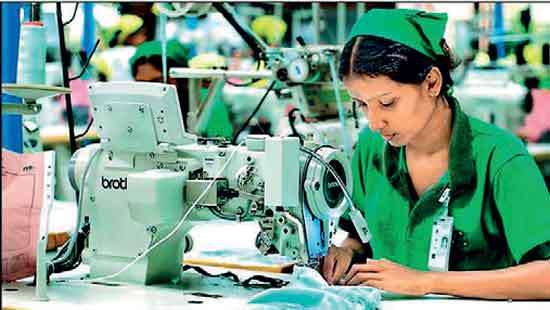
The local apparel sector is calling for stronger investment incentives to attract foreign capital into fabric mills and other upstream industries, as it looks to deepen domestic value addition and build the supply chain needed to lift exports to US$8 billion by 2030.
The Joint Apparel Association Forum (JAAF) identified Sri Lanka’s continued dependence on imported raw materials as a key constraint to the industry’s next phase of growth, noting that domestic production currently meets barely a third of demand for synthetic yarn and fabric.
It is seeking incentives not only to attract fresh foreign direct investment into apparel manufacturing, but also to encourage existing manufacturers to reinvest in fabric mills, trims and packaging, creating a more integrated domestic supply chain.
Apparel exports have remained around the US$5 billion mark for the past five years, leaving the industry with a substantial leap required to reach its US$8 billion ambition. The target is aligned with the government’s National Export Development Plan, which aims to increase overall merchandise exports from US$13.6 billion in 2025 to US$28 billion by 2030. JAAF argues that Sri Lanka will need an investment proposition capable of competing with incentives offered by rival manufacturing destinations if it is to attract capital into the upstream industries required to support further apparel growth. The industry sees a stronger domestic supply chain as critical not only to reducing reliance on imported inputs, but also to increasing the share of export value retained within Sri Lanka as global competition intensifies.
Manufacturing competitors with deeper supply chains, wider trade access and lower production costs have increasingly pulled ahead, while automation, digitalisation and sustainable manufacturing have moved from being differentiators to basic requirements for competing in the global apparel industry. Alongside deeper domestic value addition, JAAF is pushing for significantly wider preferential market access, including a trade arrangement with the United States. The industry wants the Government to pursue a preferential trade arrangement with the US, apply for the European Union’s new GSP Plus scheme in 2027 and strengthen Sri Lanka’s existing free trade agreement with India.
It is also seeking the opening of trade negotiations with South Korea, Japan, Australia and New Zealand, together with a dedicated government-industry working group to maintain focus and continuity in trade negotiations.
The combination of stronger domestic value addition and wider preferential access to major markets is central to the industry’s effort to find the next US$3 billion in exports, after several years in which earnings have struggled to move materially beyond the US$5 billion level.
JAAF is also calling for greater adoption of automation, robotics and AI-driven manufacturing to lift productivity, arguing that Sri Lanka risks falling further behind manufacturing hubs that have already made the transition.
Beyond investment and trade, the industry wants faster approvals, clearer VAT treatment for exporters, greater flexibility for companies to transact in foreign currency and long-awaited labour law reforms.
Energy competitiveness has also been identified as a priority, with open access and power wheeling regulations moving towards being fast-tracked, coupled with stronger incentives for battery storage to give manufacturers access to more reliable and sustainable power.
JAAF’s proposals effectively seek a renewed government-industry compact, with manufacturers committing to investment, productivity improvements, domestic supply-chain development and employment, in return for better market access, a competitive tax environment, lower business costs and greater regulatory certainty.
Apparel remains one of Sri Lanka’s most important export industries, accounting for roughly 40 percent of merchandise export revenue and directly employing an estimated 300,000 to 350,000 people.
Source: Daily Mirror