Tax concessions fail to address professionals’ concerns, economist says
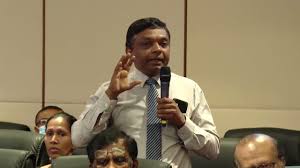
Tax concessions proposed in the 2027 Budget do not adequately address the concerns of professionals, while Sri Lanka should seriously consider introducing a wealth or property tax, University of Colombo Professor Priyanga Dunusinghe has said.
Speaking at a budget seminar in Colombo, Dunusinghe said the country needed to focus on investment, private consumption and productivity enhancement to strengthen economic growth.
He argued that the tax concessions offered by the Government did not address the concerns driving skilled professionals to seek opportunities overseas.
“We always hear that talent migrate due to higher taxes. The tax concession offered by the government does not address this,” he said.
Dunusinghe also called for greater consideration of wealth and property taxation, arguing that the country needed to address economic inequalities and the challenges facing the middle class.
He stressed the importance of trade agreements and land reforms, particularly for the development of the agricultural sector.
He also questioned whether Sri Lanka could achieve stronger economic growth while a significant proportion of its working-age population remained outside the labour force.
While emphasising the importance of maintaining the International Monetary Fund programme as an external economic anchor, Dunusinghe warned that the failure to provide opportunities for young people to fulfil their aspirations could accelerate youth migration.
He said policymakers needed to take the issue seriously and create an environment in which young people could realise their ambitions within the country.
Meanwhile, Chairman of the Sri Lanka branch of the International Fiscal Association, N. R. Gajendran, said Sri Lanka was struggling to attract investors because of shortcomings in both its investment climate and incentive framework.
Participating in a panel discussion at the event, Gajendran said attracting investment required more than offering financial incentives, stressing that investors must have confidence in the country’s systems and institutions.
“Investors must first feel good, and they should be able to trust the system,” he said.
He suggested that the Government should engage directly with major investors to understand what they needed to establish or expand their businesses in Sri Lanka.
Gajendran also identified administrative bottlenecks and the reluctance of public officials to make decisions as major obstacles to investment.
He said officials could face scrutiny from internal and external auditors, as well as complaints, even when they made decisions in the public interest. This, he argued, could discourage officials from taking decisions that facilitate investment.
Emphasising the importance of effective public administration, Gajendran said the quality of implementation could make a significant difference, even when policies were inadequate.
“Even if the policy is horrible, if the administration is good, you can make a wonder,” he said.
The discussions highlighted the importance of addressing concerns over taxation, investment confidence, institutional efficiency and opportunities for young people as Sri Lanka seeks to strengthen its economic recovery and attract private sector investment.
Source: Hiru News