Beyond Cost: Trust is ASEAN’s Next Competitive Advantage
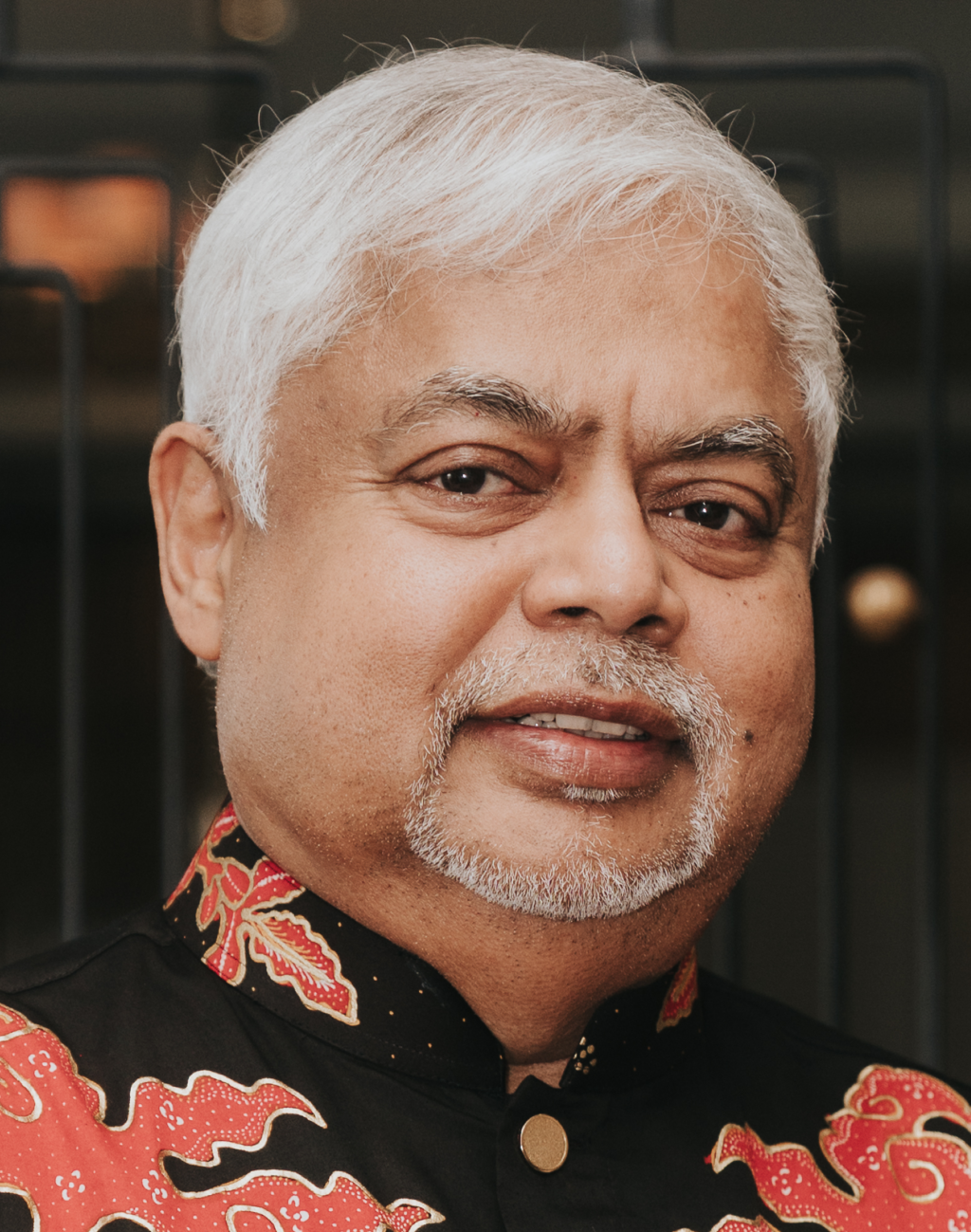
By Dato’ Sri Vijay Eswaran
For decades, ASEAN has built its economic foundation on distinct regional advantages, namely strategic manufacturing capabilities, a growing talent pool and strong regional connectivity, all aimed at shared prosperity.
Today, businesses are making decisions in a very different environment. Geopolitical uncertainty, shifting supply chains and rapid advances in AI are changing how companies assess risk and long-term opportunity.
Cost competitiveness remains an essential pillar of ASEAN’s appeal, but it is no longer the sole deciding factor.
As highlighted in The Business Times Insights: ASEAN Intelligence 2026, resilience and trust are becoming increasingly important considerations for businesses operating and investing in the region. Companies are diversifying their operations to prioritise stability. They are looking for environments where policies are predictable, institutions are reliable and the operating landscape is clear.
Hence, ASEAN’s next competitive advantage lies not in choosing between cost and trust but in recognising that trust, regulatory clarity and strong institutions powerfully complement our existing strengths.
Shifting from cost to confidence
Geopolitical decoupling and trade fragmentation are rewriting global supply maps, forcing businesses to rethink their exposure. Companies are diversifying operations and building regional networks, prioritising stability over the thinnest margin.
The OECD’s Asia Capital Markets Report 2026 reinforces this reality, emphasising the importance of governance, transparency, and institutional maturity are key drivers of investor confidence and creating long-term value. For ASEAN policymakers and business leaders alike, the mandate is clear: sustainable growth relies on offering a predictable legal and regulatory environment.
Efficiency brings businesses to the table. But confidence is what convinces them to stay.
Trust is built through governance
Strong institutions often go unnoticed until uncertainty puts them to the test. Building a business takes more than finding opportunities; it demands clear rules, transparent enforcement and policies that do not change with the political wind.
This becomes critical as AI transforms industries at breakneck speed. AI does not wait for consensus. It moves faster than legislation, and without clear guardrails, businesses will hesitate to embed AI into their core operations.
In that respect, steps taken across the region have been encouraging. For example, the establishment of AI Malaysia Berhad, building on the foundational work of the National AI Office, signals a commitment to governance that enables rather than restricts innovation.
Similarly, Singapore’s testing-centric AI Verify framework sets a strong benchmark by prioritising continuous validation and ethical compliance over rigid restrictions while giving businesses the operational flexibility they need.
In Indonesia, the push to formalise the National Artificial Intelligence Strategy through regulations, alongside ethical guidelines from the Ministry of Communications and Digital Affairs, demonstrates a commitment to aligning technological growth with long-term public trust and accountability.
The Philippines is also institutionalising this balance. Its National AI Strategy Roadmap 2.0 proactively embeds transparent governance and data ethics directly into the country’s broader digital and industrial transformation efforts.
Meanwhile, Vietnam’s newly approved National Digital Transformation Strategy for 2026-2030 and its proactive Law on Artificial Intelligence establish a risk-based legal framework that seeks to balance innovation with oversight, signaling to investors a more predictable environment.
Good governance is not a brake on ambition. It provides businesses with the certainty they need to innovate and invest, while helping to ensure that new technologies deliver long-term value to both the economy and society.
Strengthening foundations for the long-term
Our region possesses profound structural advantages: a youthful demographic, rising digital fluency, and an expanding consumer market.
By pairing these advantages with institutional reliability, we can unlock immense potential. Certainty informs the long-term decisions of entrepreneurs and global partners alike. It can make a difference between a company merely establishing a temporary base and choosing to expand, reinvest, and deepen its roots in the region.
Trust does not replace ASEAN’s traditional strengths. It amplifies them.
The narrative of ASEAN is evolving. Cost efficiency will always factor into the investment equation. Trust, however, is the catalyst that transforms short-term interest into enduring economic partnerships.
By continuing to prioritise governance and transparency, ASEAN can secure its place not just as a vital node in the global economy, but as a permanent home for long-term growth and innovation.
The writer is the Executive Chairman of the QI Group of Companies